Value
All most people need
Autel MaxiCharger AC Lite
- Charger
- $770
- Installation
- $1,600
- Typical range
- $2,150 – $2,950
- Tethered Type 2 cable, works with every EV sold in Australia
- App scheduling for off-peak rates
- Weatherproof for a carport or driveway

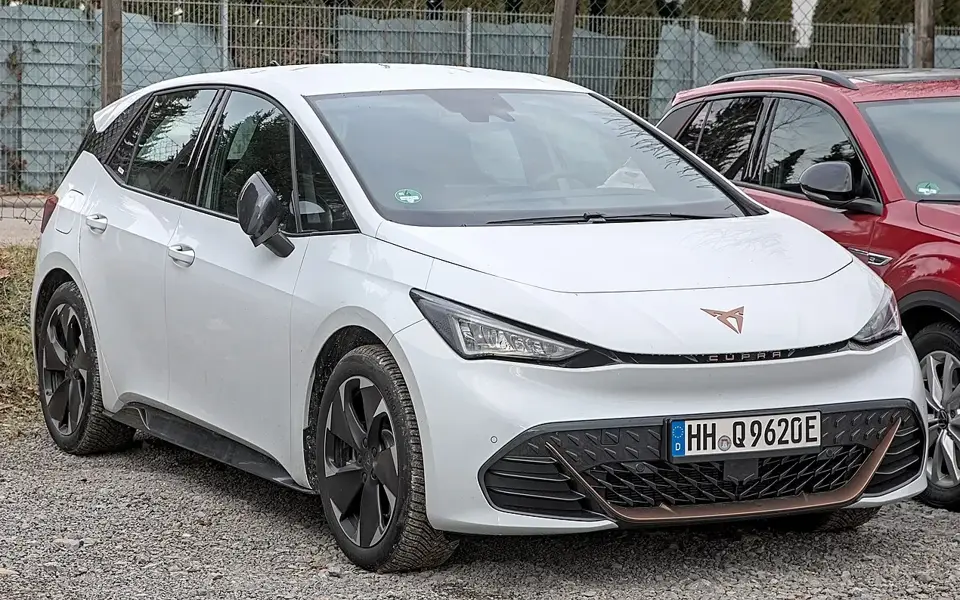
Cupra Born · home charging
Three options, priced supplied and installed from $2,370. Pick one and book an install or a call — it takes two minutes.

Photo: Alexander-93, CC BY-SA 4.0
Electric vehicle
Charges at home at up to 11 kW on three-phase power, or 7.4 kW on single-phase.
The cable that came with the car, on a normal powerpoint: about +15 km per hour. A wall charger is roughly 3× that.
Value
All most people need
Smart solar
Runs on your spare solar

Fast
Your car's top home speed
Needs three-phase power at your home. We check before quoting.
Prices are indications from typical Australian retail for each charger (September 2026) plus our average installation cost. Your fixed price depends on your switchboard and how far the car parks from it — we confirm it, and your exact model, before any work starts.
Every electric car sold in Australia uses the same Type 2 plug, so any of these chargers will work with it. Tell us what you drive and we’ll call with the right option and a price.
No bait prices. Each estimate is the charger’s typical Australian retail price plus our average installation cost.
| Autel MaxiCharger AC Lite7 kW · single-phase | $770 |
|---|---|
| Tesla Wall Connector (Gen 3)7.4 kW · single-phase | $800 |
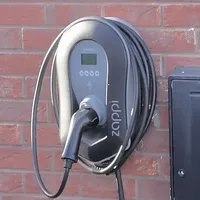
| myenergi zappi 7kW7 kW · single-phase | $1,450 |
| Wallbox Pulsar Plus 22kW22 kW · three-phase | $1,580 |
| Single-phase, typicalDedicated circuit, safety switch, normal cable run | $1,600 |
|---|---|
| Three-phase, 11–22 kWWhere the home already has three-phase | $3,000 |
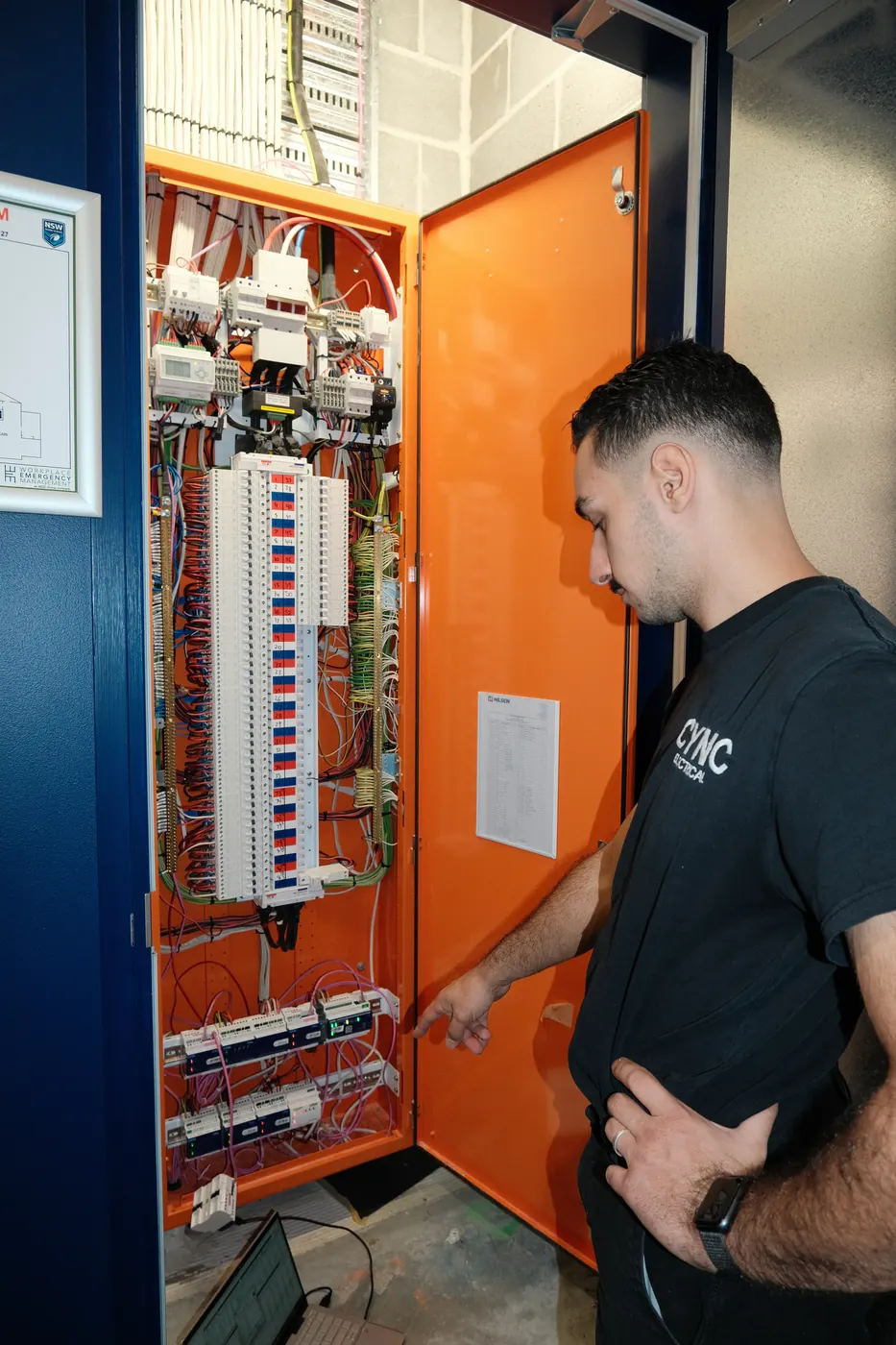
| Switchboard upgradeOnly if the board is full or has no RCD — quoted separately | $1,500 – $3,500 |
More detail in our EV charger installation cost guide, or see how we install EV chargers.


Your switchboard and where you park. With those we can usually fix the price without a visit.
Charger, cable run, circuit and safety switch — all in, in writing. If the board needs work, you see that as its own line.
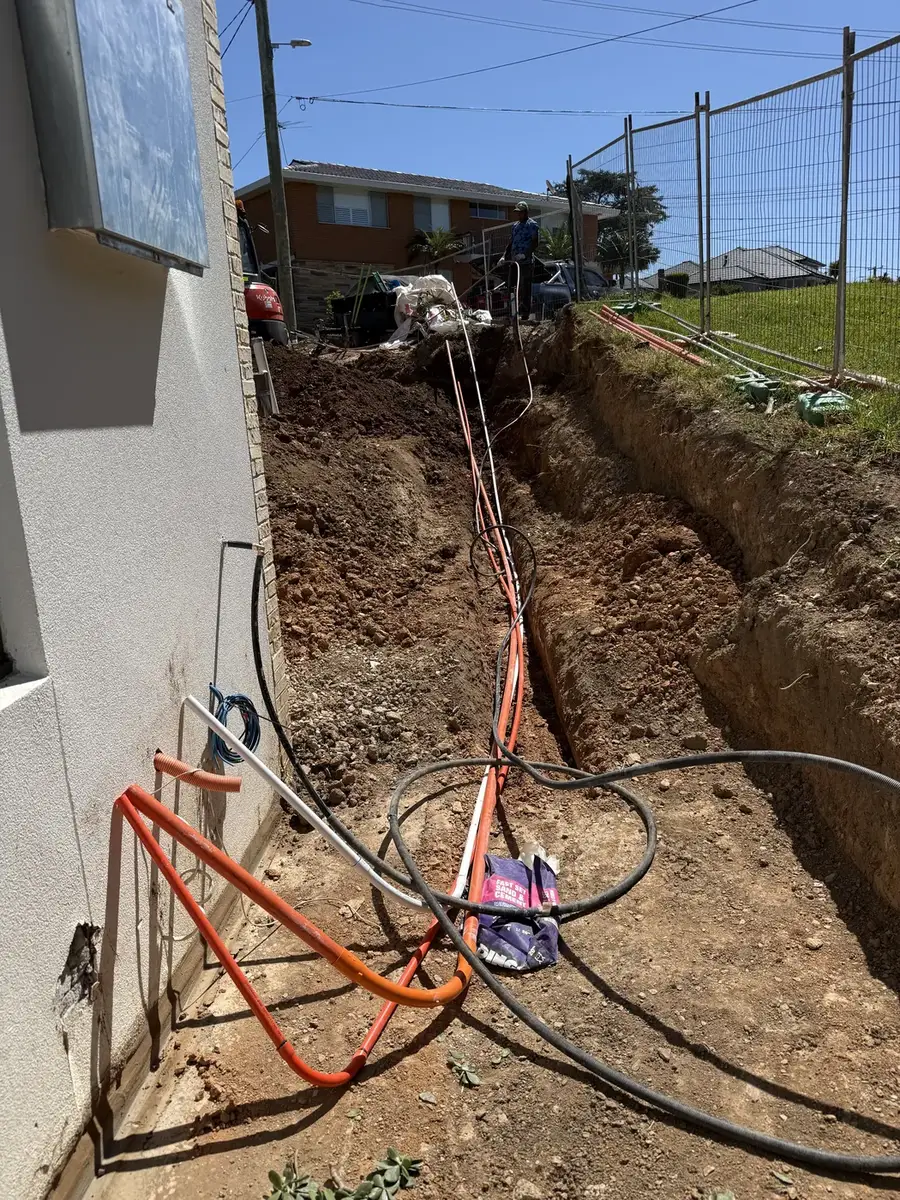
Most installs take half a day. We mount, wire, test and commission the charger, and set it up in the app with you.
We lodge the Certificate of Compliance for Electrical Work, as NSW requires, and you get a copy for your records.
Jason solved a really complex problem for our house with excellent professionalism and workmanship. Highly recommend, would def work with him again. On time delivery and within budget.
Excellent value and service, including follow-up.
Jason onsite quickly and completed the work on the spot, giving us a good price and was very polite. Would highly recommend.
Reliable and quality service.
Fantastic service! Friendly, efficient and well priced. Highly recommend.
Jason was reliable, knowledgeable and communicated the problem in simple terms to understand with patience.
These are Google reviews for our team at Cync Electrical & Automation — the licensed contractor behind North Shore Electrical & Automation. 5.0 from 20 reviews. — see the profile
The Cupra Born can charge at up to 11 kW, but only on three-phase power. On a normal single-phase home it tops out at 7.4 kW — about 40 km of range an hour, which refills a typical day's driving in an hour or two. A 7 kW charger suits most owners; the three-phase option (around $4,580 installed) only makes sense if you already have three-phase and regularly need a big top-up quickly.
You can get by on the cable that comes with the car and public chargers, but almost every owner ends up wanting one. A wall charger adds around 40 km of range per hour instead of about 15, charges on cheap overnight rates or your own solar, and it’s far safer for hours-long charging than a standard powerpoint.
A typical EV uses about 15–18 kWh per 100 km. On an off-peak rate of around 25–30c per kWh that’s roughly $4–$5 per 100 km — a fraction of petrol. Charging from your own solar is close to free.
Yes. Every electric car sold in Australia, Teslas included, uses the same Type 2 plug for home charging. A good charger outlasts the car it was bought for.
No. Most North Shore homes are single-phase, and a 7 kW charger adds about 40 km of range an hour — enough for nearly everyone overnight. Three-phase only helps if your car accepts 11 kW or more and you often need a big top-up quickly.
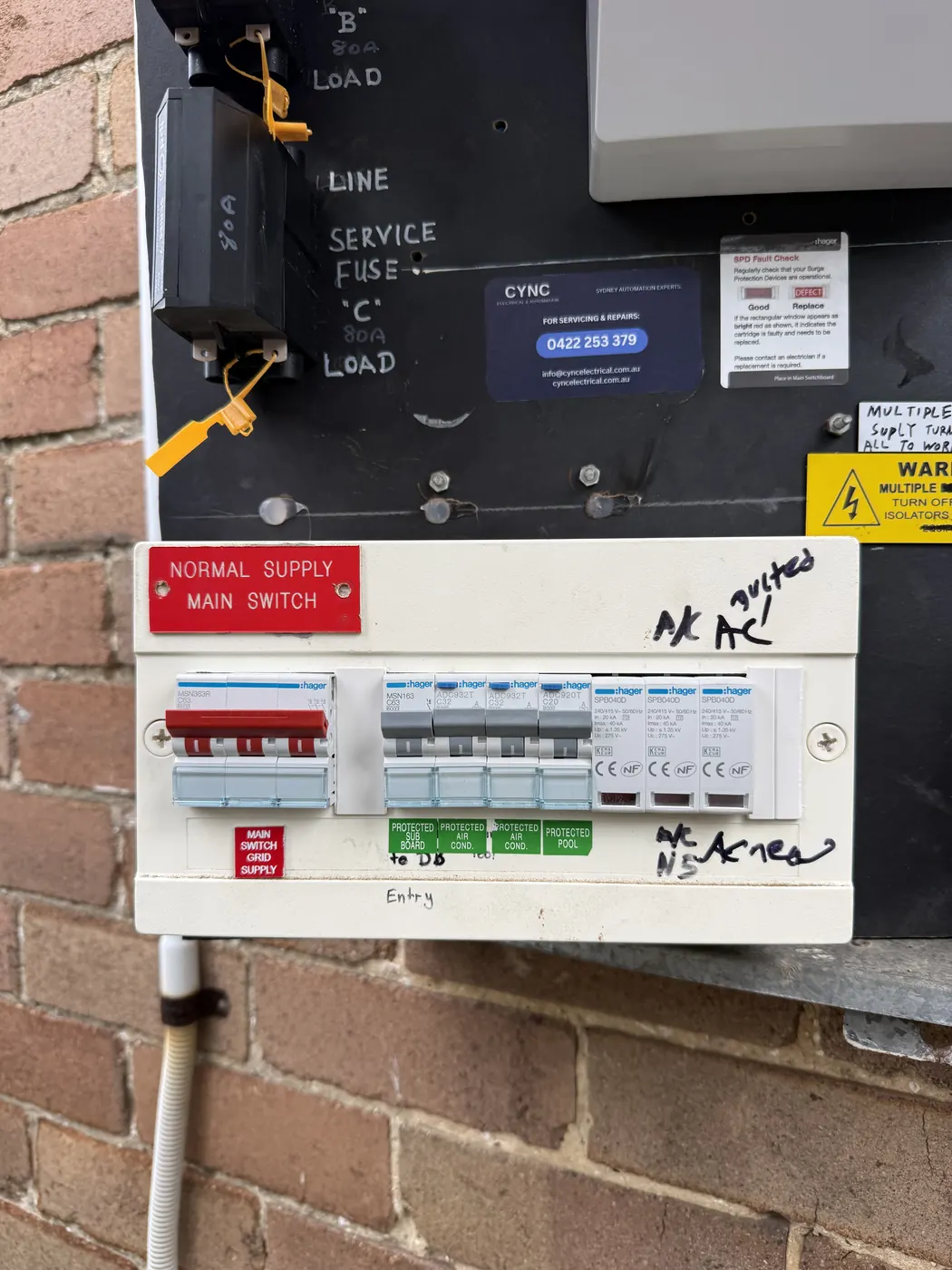
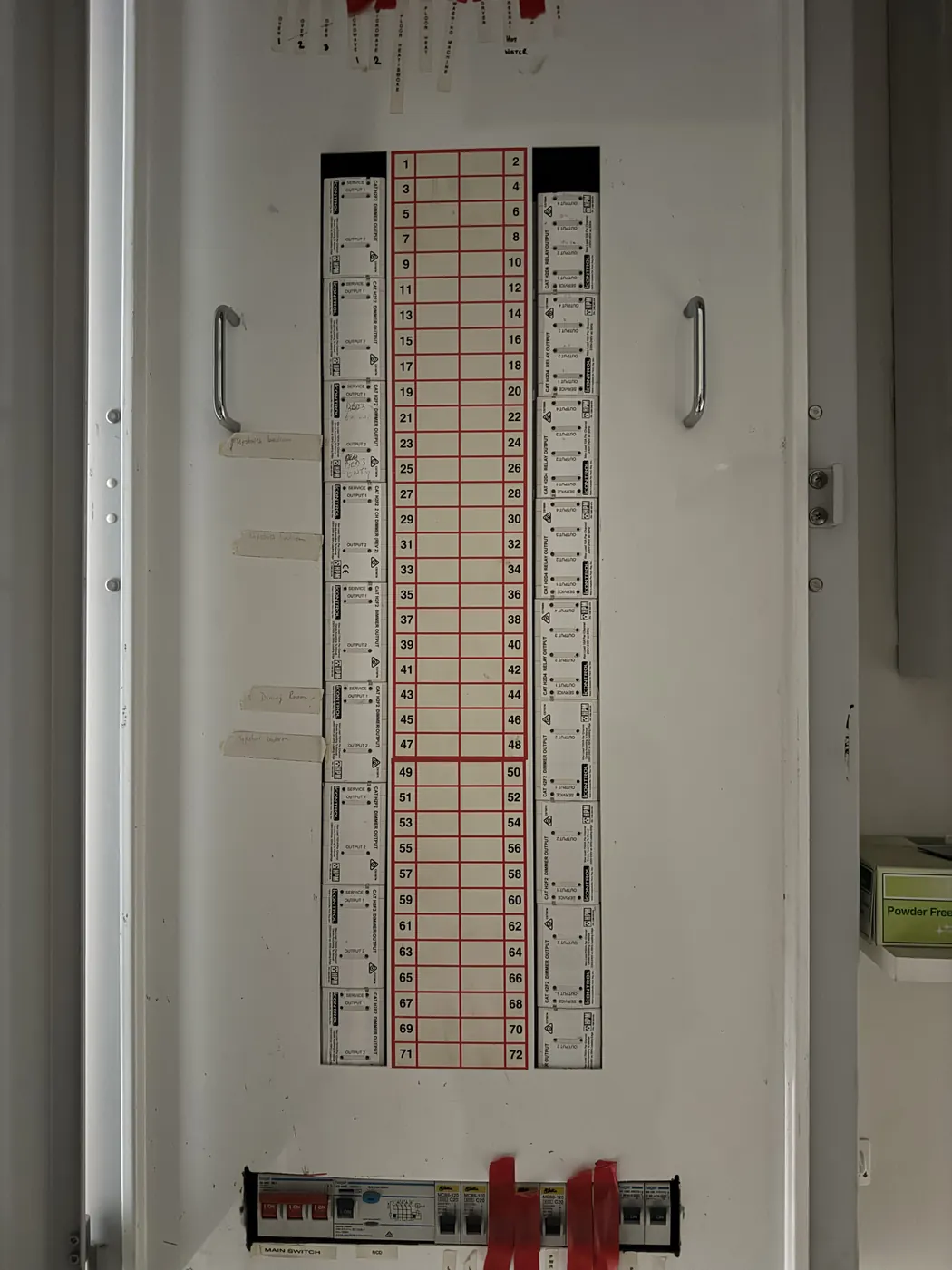
That’s the first thing we check. It needs a spare way, enough supply capacity and the right safety switch. Many 1970s–80s boards on the North Shore need an upgrade first — if yours does, we quote that separately so you can see exactly what you’re paying for.
Yes. A solar-aware charger like the myenergi zappi watches what your panels are exporting and sends that power into the car instead — earning you far more than the feed-in tariff would.
Most installs are done in half a day. A long cable run, a detached garage or a switchboard upgrade can make it a full day. You’ll know which before we start.
Usually, yes — NSW strata law now makes it much harder for an owners corporation to refuse a reasonable EV charger request. We can help with what the committee needs to see.
Yes, as long as it’s compliant and suits your supply. If you haven’t bought one yet, we’ll tell you what actually matters for your car and your home.
The charger is a known price; the installation depends on your switchboard and how far the car parks from it. Our installation figures are averages — $1,400–$2,200 for a typical single-phase job. We confirm a fixed price before starting, and it doesn’t move.
Call a licensed electrician — not a call centre. We’ll tell you what your car and your switchboard actually need.
Car and charger photos are from Wikimedia Commons, used under Creative Commons licences, and were cropped and resized for this page. Brand and model names belong to their owners; we’re an independent installer, not affiliated with any car or charger maker.