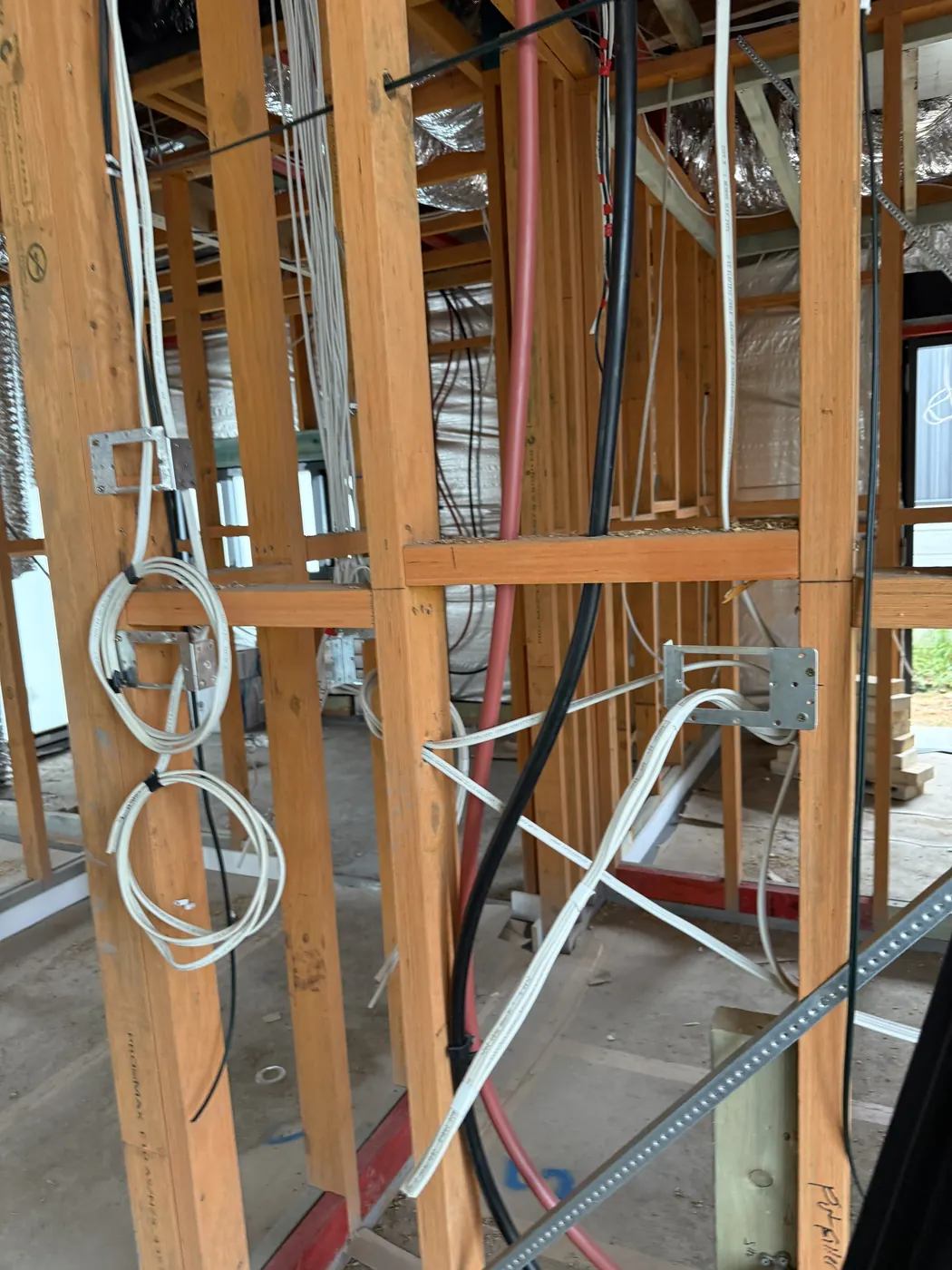
House rewiring and renovation electrical
Not every old house needs rewiring. The ones that do usually announce it, and it's worth knowing which you have.
How to tell what's in your walls
Wiring is dated by its insulation, and each era fails differently.
Rubber-insulated (VIR), pre-1960s. Rubber perishes. It goes hard, then brittle, then it cracks and falls off the conductor entirely, leaving bare copper inside your walls and roof. This is the one that genuinely needs rewiring, and there's no repairing it — once you find it in one part of a house, it's almost always throughout.
Cloth-covered, 1950s–60s. Similar story, often with rubber underneath the cloth.
Early PVC / black rubber TPS, 1960s–70s. Better, but the early formulations go brittle with heat, particularly in roof spaces which in a Sydney summer get extremely hot. Cable that's fine in a wall can be crumbling in the ceiling above it.
Modern PVC TPS, 1980s onward. Generally sound. Houses of this era usually need switchboard and circuit work rather than rewiring — not enough circuits for modern load, rather than degraded cable.
Wahroonga, Killara and Mosman have the most pre-1960 stock in our patch, so rewires come up there more than in the newer strata around Chatswood.
Full rewire, partial, or staged?
A full rewire means every circuit replaced. It's disruptive — access is needed to walls and ceilings throughout, and there's patching afterwards.
A partial rewire replaces the circuits that are actually degraded, most often lighting circuits in the roof space where heat has done the damage, while leaving sound circuits alone. On plenty of houses this is the honest answer and it costs a fraction of a full rewire.
Staging matters if you're living in the house. A rewire doesn't have to happen in one week with the power off throughout. We can work area by area — bedrooms first, then living areas, then the kitchen — so you always have a functioning part of the house. It costs a little more in total attendance and it's usually worth it.
The best time, obviously, is during a renovation when walls are already open. If you are renovating any significant part of an older home, have the wiring assessed while the plaster is off. That is the cheapest rewire you will ever be offered.
What rewiring costs
Sydney, 2026. Access is the biggest variable — a single-storey home with a walkable roof space is very different from a two-storey with no access.
| The job | Price |
|---|---|
| Partial rewire — lighting circuits onlyCommon where roof-space heat has degraded cable | $3,500 – $8,000 |
| Full rewire, small home (2 bed)Including a new switchboard | $8,000 – $14,000 |
| Full rewire, typical 3–4 bed single storeyThe common North Shore job | $12,000 – $22,000 |
| Full rewire, two storey or difficult accessNo roof access above ground-floor ceilings means opening walls | $18,000 – $35,000 |
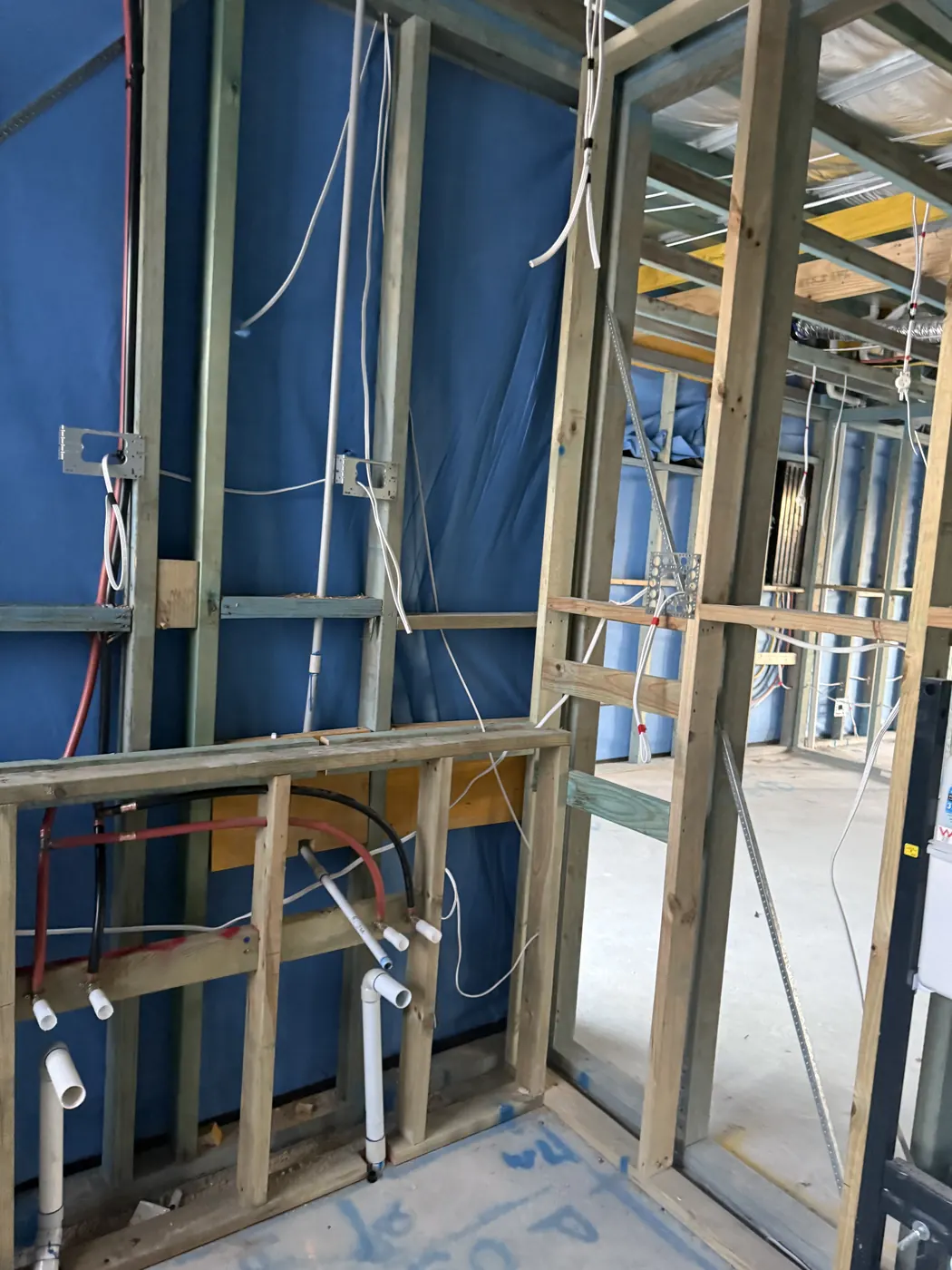
| Renovation rough-inPer room, while walls are open. Dramatically cheaper | $1,200 – $3,000 / room |
| Wiring inspection and reportFind out where you stand before committing to anything | $350 – $650 |
These are indicative market ranges for Sydney in 2026, not a quote. What you pay depends on your switchboard, access and what we find. We confirm a fixed price before starting, and it doesn't move.
Start with an inspection, not a quote
We inspect and test
Cable type at accessible points, insulation resistance testing, switchboard and earthing assessed.
You get a written assessment
What's degraded, what's sound, and what actually needs doing — with photos.
We scope options
Full, partial or staged, with costs against each, so it's your decision rather than ours.
Work in stages if you're living there
Area by area, so you always have a working part of the house.
Rough-in on site
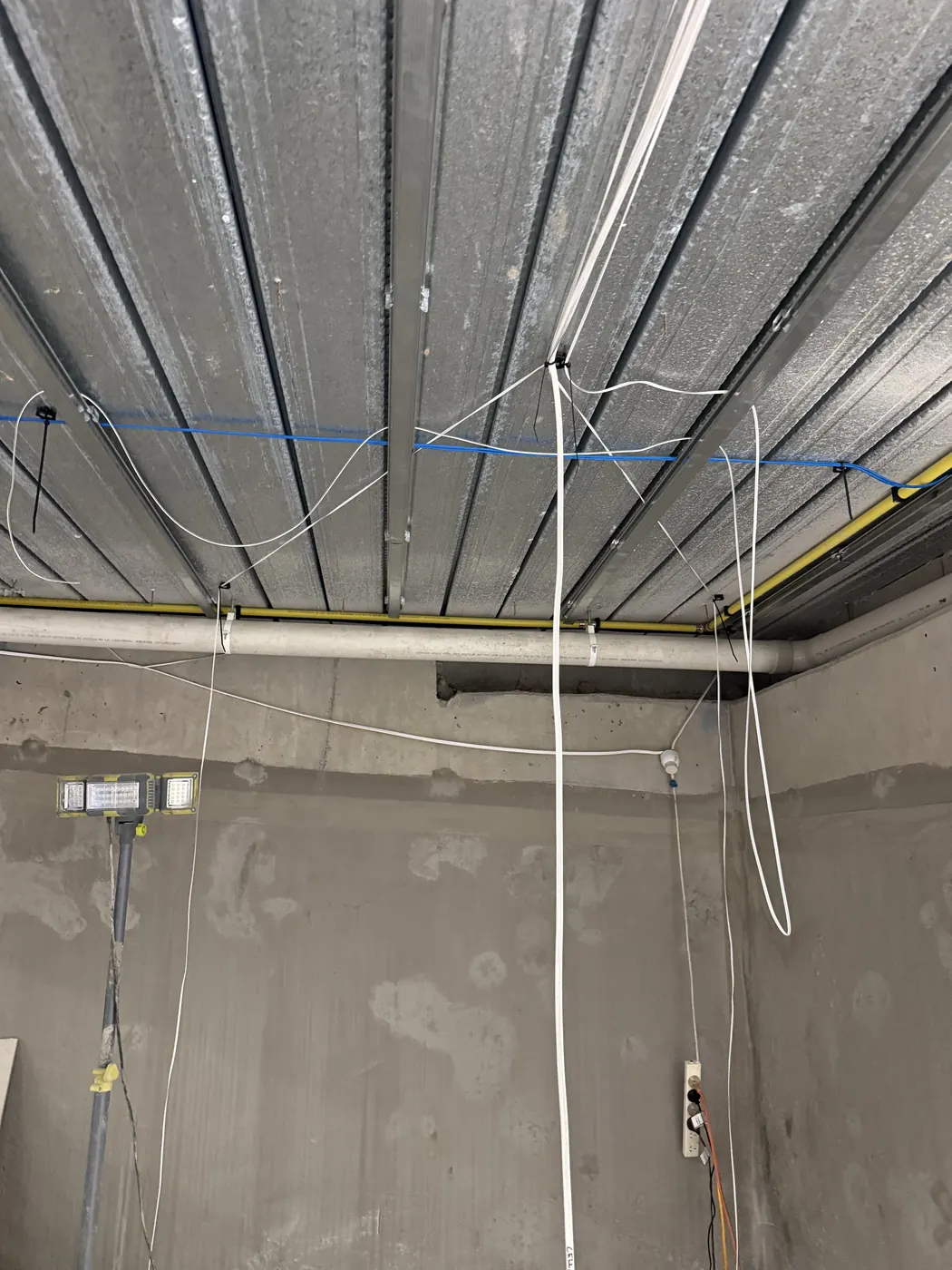
Ceiling and lighting rough-in before the plasterboard goes on.
Rewiring questions
How much does it cost to rewire a house in Sydney?
$12,000–$22,000 for a typical 3–4 bedroom single-storey home including a new switchboard. Two-storey or difficult-access homes run $18,000–$35,000. A partial rewire of just the degraded circuits can be $3,500–$8,000.
How do I know if my house needs rewiring?
The deciding factor is cable type. Rubber-insulated or cloth-covered wiring — generally pre-1960 — needs replacing, because the insulation perishes and cannot be repaired. Early black rubber TPS in hot roof spaces may need partial replacement. Modern PVC usually doesn't.
Can I stay in the house during a rewire?
Yes, if it's staged. We work area by area so there's always a functioning part of the house. It costs slightly more in total attendance and it's usually well worth it.
Will you have to cut holes in my walls?
Some, yes — that's unavoidable. In a single-storey home with a walkable roof space, far fewer than people expect, because most runs can come from above. Two-storey homes with no access above ground-floor ceilings need more.
Does a rewire include a new switchboard?
It should, and our figures assume it. Rewiring to a board that can't provide proper RCD protection would be spending most of the money and leaving the important part undone.
Is a partial rewire a false economy?
Not necessarily. If the lighting circuits in the roof are degraded from heat but the wall circuits are sound modern PVC, replacing only what's degraded is the honest answer. We'd rather test and tell you than sell you a full rewire by default.
When's the best time to rewire?
During a renovation, while walls are open. If you're renovating any significant part of an older home, have the wiring assessed before the plasterer arrives.
What customers say
Jason solved a really complex problem for our house with excellent professionalism and workmanship. Highly recommend, would def work with him again. On time delivery and within budget.
Jason onsite quickly and completed the work on the spot, giving us a good price and was very polite. Would highly recommend.
Fantastic service! Friendly, efficient and well priced. Highly recommend. Thank you for swiftly fixing our switches.
These are Google reviews for our team at Cync Electrical & Automation — the licensed contractor behind North Shore Electrical & Automation. 5.0 from 20 reviews. — see the profile
Rough-in and rewiring
Worried about what's in your walls?
Start with an inspection rather than a quote. Call 0422 253 379.